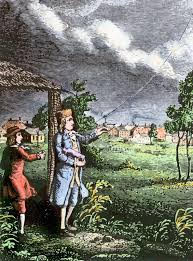
Ben Franklin “discovers” electricity
While human beings have roamed the earth for over two million years, evidence of what we call civilization, farming and cooperative community living, is first found in the Fertile Crescent of Mesopotamia about 12000 years ago. Unless one counts the wheel which appeared 5000 years ago, humans seemed unable to develop many skills or innovations to make daily life easier until five hundred years ago. Life in 1600 was pretty much the same as it was in Mesopotamia 13,000 years earlier. To paraphrase philosopher Thomas Hobbes in another context life was “nasty, brutish and short”. It was only in the 17th and 18th centuries, the age of Enlightenment and Science, that progress began to be made to improve the human condition.
By the 1800s the germ theory of disease led to vaccines and treatments for many diseases which had previously been killed millions and caused horrible suffering to millions of others; Darwin’s Theory of evolution transformed biology and men such as Benjamin Franklin were trying to understand natural phenomena such as electricity on a rational rather than superstition basis. Franklin did not “discover” electricity as has been claimed; its existence had been known for centuries, but Franklin’s articulation of its true nature transformed the world more fundamentally than any other discovery.

A large family perhaps
Consider our reaction today when we lose power. Our world stops. Near panic ensues if the “outage” persists for any length of time as we contemplate the possible loss of our “Wordle” record for even if we have a generator the internet may be down. For those without a generator it’s back to a “nasty, brutish and short” existence for the duration.
Still there are those alive today who were born in a world without electricity and found life both enjoyable and rewarding despite memories of those trips to the outhouse on a bitter winter’s night. It had not occurred to me until recently that when I was born in 1947 there were still a lot of people in Washington and Charlotte Counties who got along quite well without a radio, running water and electric lights, including many on the Ridge Road in Robbinston on which I now live. Zela Cousins who lived on the Airline recalls paying her first electric bill of $2.75 on February 22, 1945. Minerva Gray of Wesley raised her family without electricity and running water until 1972 when she got her first electric washing machine. She had “an old-fashioned washing machine. I was the motor: there was a handle I could turn. Before I got it, I always washed with a scrub board and boiler. We used kerosene lamps and a hand pump for the well which was outside. We weren’t used to having electric power, so we didn’t miss it!”
In fact the answer to the question “When is the power coming on?’ was for many rural folks, “Don’t hold your breath. Electricity is for city folks.”
Gordon Lord describes growing up in Crawford during World War Two without electricity:
Mom’s Long Day:
In our family, the day started with Dad getting up early to start the fire in the large, black kitchen cook stove. Mom could juggle at the same time baking bread in the oven, frying donuts on the stove top, cooking oatmeal, frying eggs and warming water to wash the meals dishes. During cold weather Dad would also light the living room heater each morning. While dad was doing his morning chores, Mother would be up cooking breakfast. After thanking God for his many blessings, we sat down to a breakfast of oatmeal or cream of wheat, toast and milk, or it could be eggs and, or pancakes, and sometimes a molasses donut, or two direct from the frying pan. Kerosene lamps were used for light. By today’s standards, illumination was quite poor, but we didn’t know any different. There was no toaster, so bread was toasted on the stovetop. All cooking was done on the wood cookstove by our mother. Little if any, previously cooked foods were purchased at a grocery store. Food was cooked from scratch, by memory most of the time. The stove gave off a lot of heat, especially during canning season when it was already hot outside. This combination made it nearly unbearable for the housewife, slaving over the stove in a tiny kitchen with her cooking and canning. While the stove was hot she would also be baking bread, or pies or a cake, maybe a pot of beans, her family favorite. The dependable cook stove was used to heat the flatiron by setting it on top of the stove. This heated iron, a stone or brick wrapped in cloth was used to warm cold feet in bed during those cold, long winter nights in a house with no insulation of any type.
What makes the above especially curious is that electricity came to Calais and St. Stephen in 1888. The electric streetlights were turned on in Calais on September 6th, 1888 , 80 years before Minerva Gray retired her scrub board, nearly 65 years before the homes near Johnson’s Tree Farm in Robbinston had electricity and over half a century before Gordon Lord’s mother made toast on the wood stove.
Let there be light
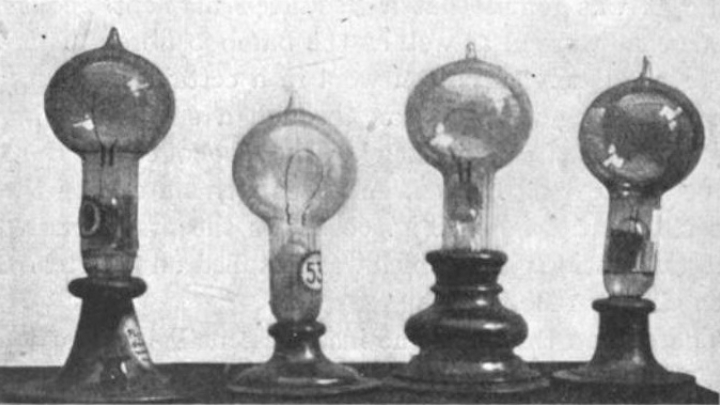
Edison’s first experimental light bulbs
While Edison did not invent the lightbulb, he did perfect and patent a carbon filament light bulb in 1879 which became the industry standard. Edison’s lightbulb fundamentally transformed daily life. It enabled factories to extend working hours, increased productivity generally and, as a result of the surge in demand for electricity, led to technical progress in electrical generation and distribution. It also enlivened cities which became safer and more social after dark.
The Calais Advertiser reported on September 24, 1880 that Edison had put the final touches on a 100 horsepower engine which was capable of lighting 800 of his new lamps and a new factory was soon to begin producing 700 lamps a day. Edison said “There is no defect in the construction of the lamps, the carbon tips of Japanese bamboo are perfect, the new trial of the light is not to be an experiment to see if it will burn, but to test on a large scale, its actual economy as compared to gas.”

The Calais Gasworks were on the river behind what is now customs
At the time many Calais homes were lit by gas piped directly into their homes by the Calais Gas Company. Some old homes in Calais undoubtedly still have old gas lines in their walls. Calais city streets were then lit at night by gaslights but the end was near for the gas concerns. As early as 1878 the Calais Times warned “Edison’s electric light was frightening holders of gas shares in London and New York.” In 1882 the Calais Advertiser opined “There is no doubt that electricity in spite of the opposition of gas companies is to be used universally for the lighting of streets and public buildings.” This prediction was to come to pass within a few years.
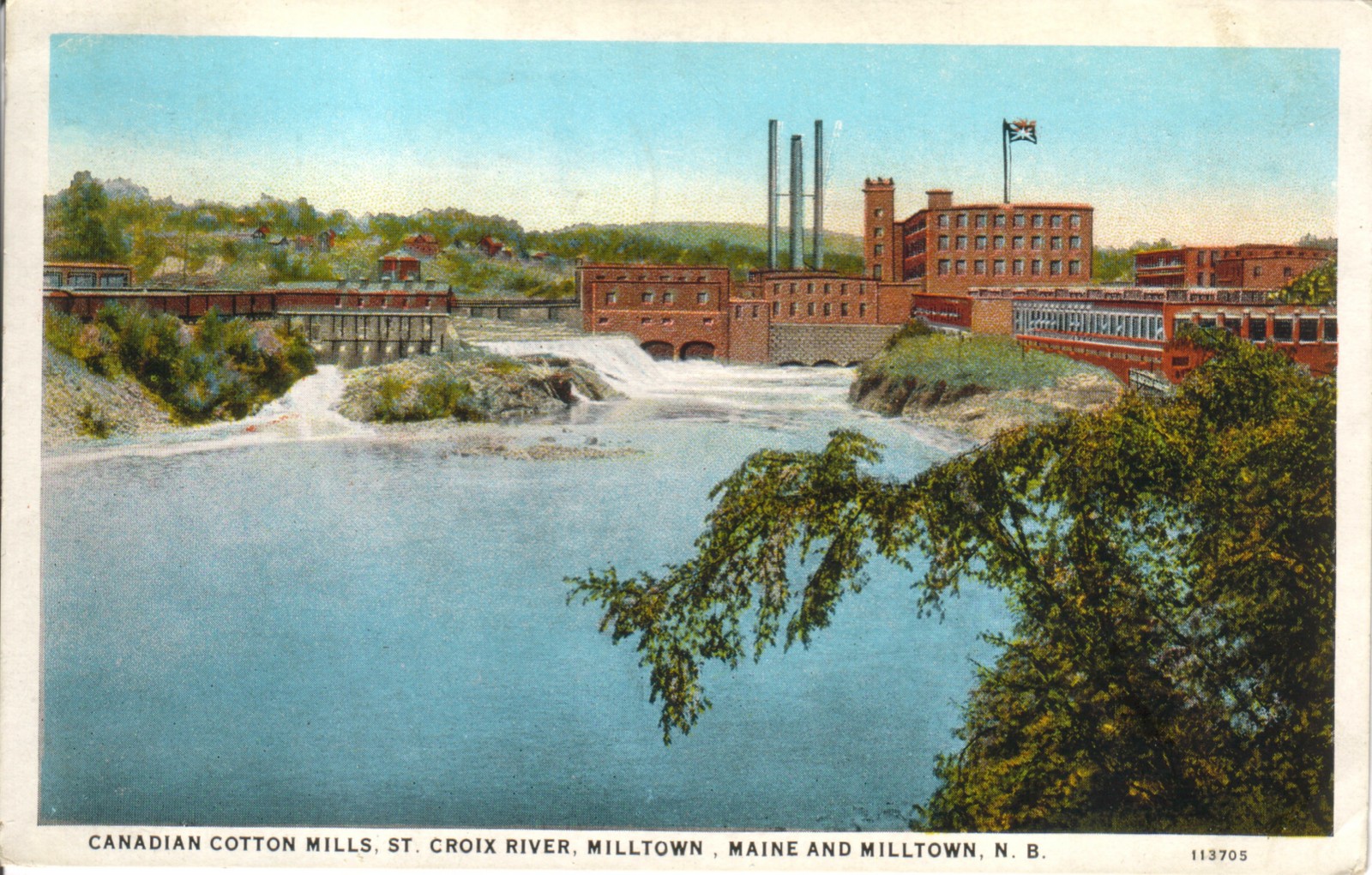
Falls below the Cotton Mill
Doug Dougherty, St Stephen Historian, describes when this new technology was adopted locally:
The first electric lighting system was introduced to the Valley Towns in 1887 with power being supplied by the water force of the Dam at the St. Croix Cotton Mill. The first electric light was turned on during Christmas Eve 1887 on the corner of the Mill Road and Water Street (Milltown Blvd.). It was said “the Mill lamp could provide enough light to tell the time on the American side of the river”. This proved far from the truth.
It would surely have been sooner but the demand for wiring and the new light bulbs far exceeded the supply. It should also be noted that the first generating plant on the border was on the Canadian side. Calais which became notable as the only city in the country to get its water from a foreign country also got its electricity from its neighbor.
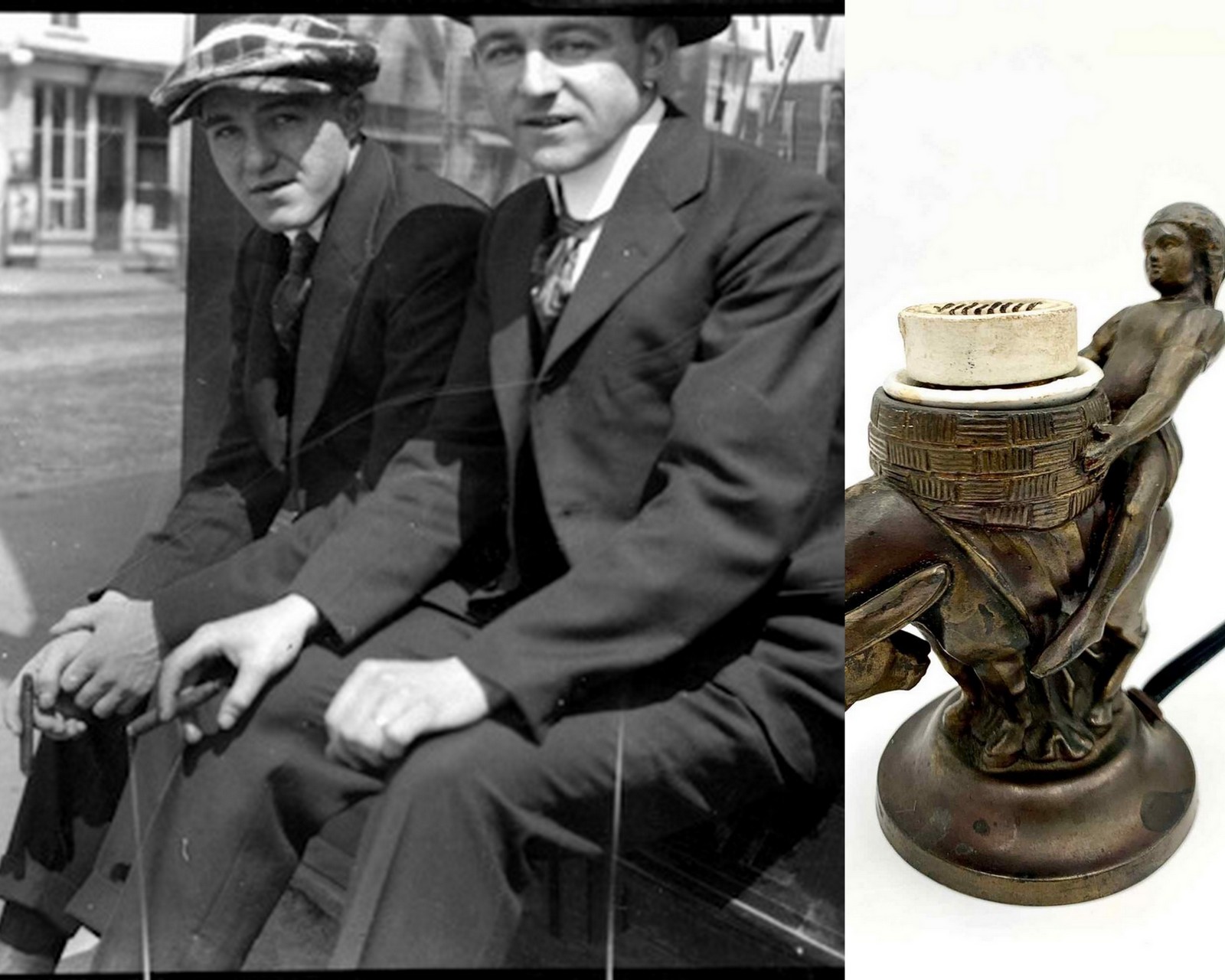
Gents enjoy a cigar at Mcininch’s Store, corner Monroe and Main Calais
By the mid 1890’s many businesses in Calais and St. Stephen had installed electric lights The first appliance to use electricity was installed in 1895, an electric cigar lighter. The cigar lighter was installed in C.E. McIninich’s drug store at the corner of Monroe and Main Streets in Calais. The gents above are sitting on the Monroe Street side of the store enjoying a cigar.
In St. Stephen in October 1896 lights were installed in JF Johnson’s Hair Dressing Parlors and in the YMCA rooms above Wall’s Store in the Watson Block. There were then over a thousand incandescent bulbs burning in Calais, St. Stephen and the two Milltowns.
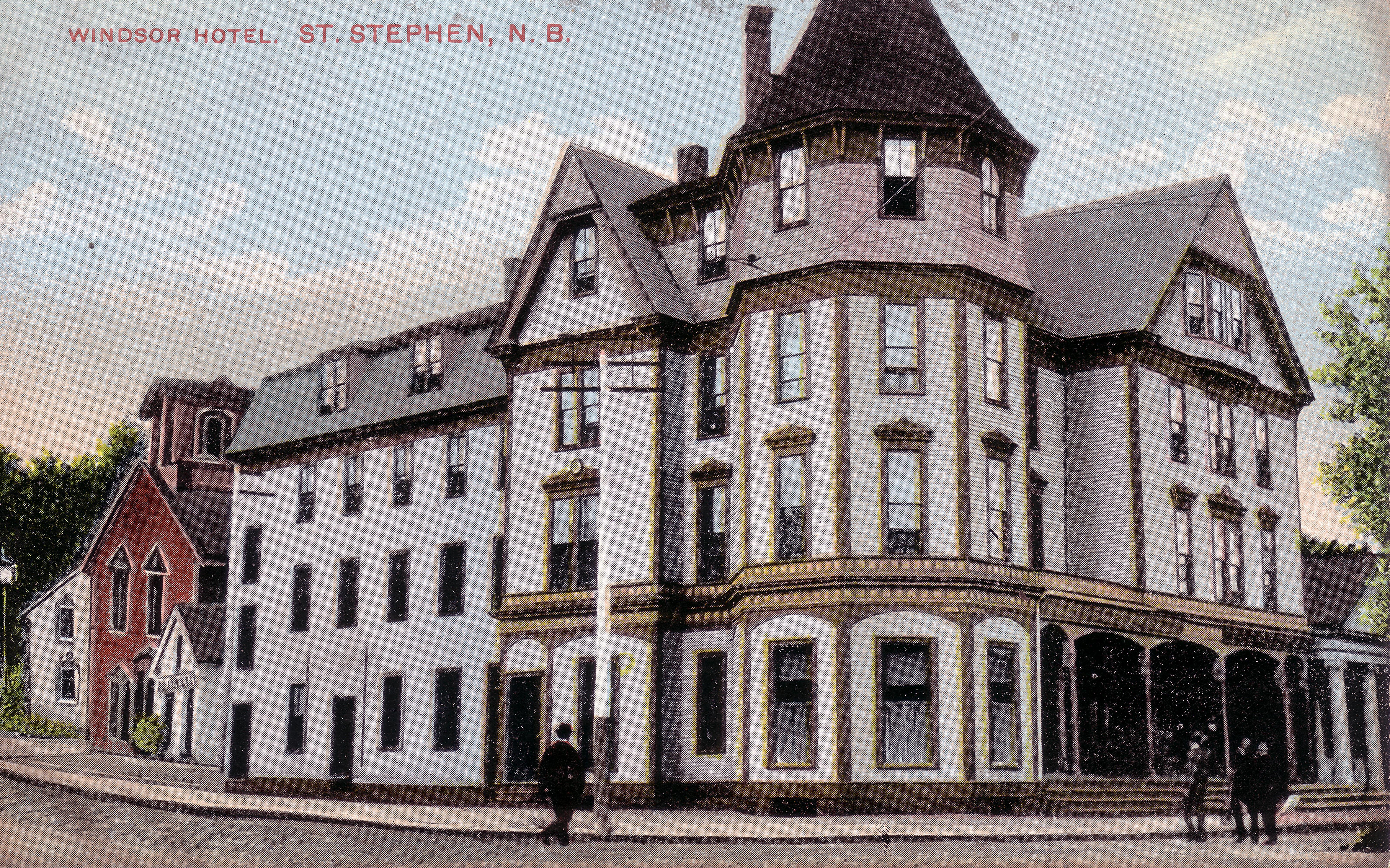
The Windsor Water Street St. Stephen
Naturally the hotels were some of the first businesses to install electricity. Historian Doug Dougherty tells us:
The beginning of 1891 saw the opening of the Windsor Hotel which was located on the corner of Marks and Water Streets known as the Goddard Lot. Mr. W.F. Nicholson, a man of 25 years’ experience in the hotel business, managed the hotel for a number of years. There were 50 rooms available to the travelling public, each equipped with the most modern facilities. The building was lighted by electricity and hot and cold water was supplied, as well as electric bells and baths. A well-furnished parlor, a ladies parlor and waiting room were provided. The dining room had a seating capacity of 50 people.
In later years when all four towns were electrified the Boston Transcript published an article on our community which included high praise for the state of development in the St. Croix Valley.
A man out of the West came to the loungers who always sit in a row in front of the Old St. Croix hotel and said to one of them:
“Why, I don’t see but you have as much of a town here as any of us—electric lights, plate glass store windows, lots of trade going on, well-dressed folks. What do people find to do here?”
“Well,” replied the inhabitant, “on this side of the river are the moving pictures; on the other is the hospital. When we get too feeble to go to the one, they take us over to the other.”
As noted above, progress in electrification was limited for many decades to the population centers. The photo below shows the Charlotte Road without power poles in the late 1930’s. As local historian John Dudley noted:
“During the first third of the twentieth century, the rural parts of America had been left behind by the process that electrified urban areas. The Rural Electrification Administration under the direction of Franklin Roosevelt’s New Deal was created to solve that inequity. Rural communities banded together in cooperatives to build their own electric utilities using low interest loans from the REA. Dennys River Electric Cooperative, the forerunner of EMEC was formed in 1940.”
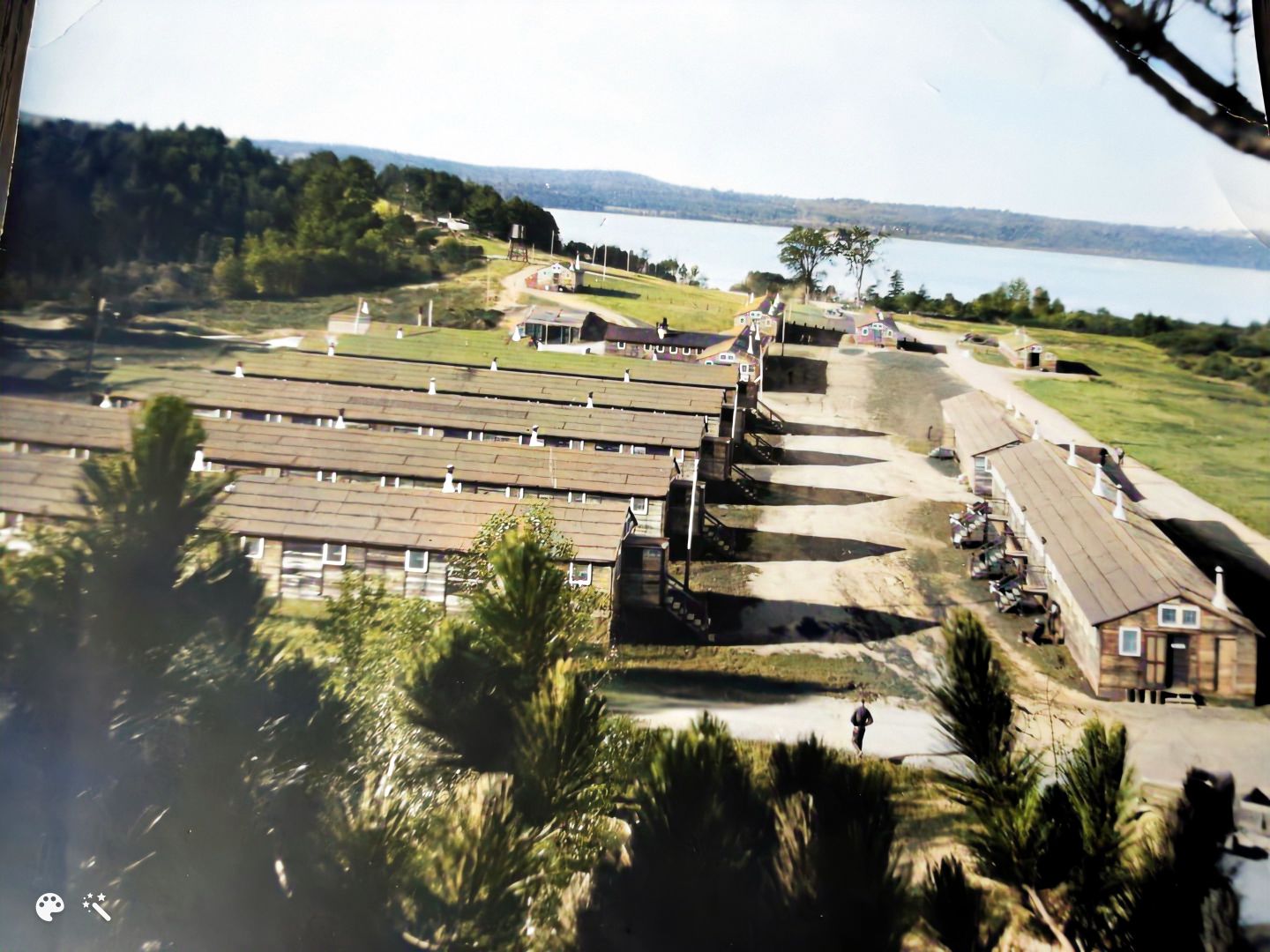
CC Camps on Charlotte Road about 1940
While the war delayed progress for some parts of the rural St. Croix Valley, electricity came to Charlotte Maine in 1942, and as Wayne Johnson recalled recently to the beginning of the Robbinston Ridge Road just after the Second World War and to the remainder of the Ridge Road in the 1950’s. Sometimes folks had to take matters into their own hands. Ev Hitchings who lived on the Higgins farm near Maguerrewock said his father had to buy and set his own poles to get power to the farm. In the late 40’s Harry Smith built his electric plant in Meddybemps but as in many rural areas power lines were installed primarily on the main highways, leaving many without electricity for many years. Pembroke was luckier than most as Bangor Hydro installed a generator in its storage works in 1910. The Herbert home and store were the first to be electrified but current was available only at night. Luckier still was Woodland which had power from the mill. In Princeton Belmore’s history tells us a fellow named Wall Mercier was responsible for turning on the lights:
Wall had installed an electric generator in the big mill and later in his little one. He furnished the first electricity in Princeton on Saturday July 31, 1897, “Line” Leland’s wedding day. The lights burned for less than an hour and then faded out. The town records for 1898 show the first payment for street lights in the town in the sum of $219. Later on electricity was generated for a time in the Eaton hardwood mill. In 1916 the town took over the electric lighting service and built the power-house that burned in the fall of 1938.
In the late 1940’s the rural areas of Charlotte County were finally connected. According to the St. Croix Courier:
In the 50s the one-room schools had been given electricity. Teachers weren’t used to this, and in at least one school the power meter was changed three times because it didn’t go round. The teacher just didn’t use the lights.
There were promises out there of electricity coming to the ridges. By the mid-fifties the lines were running up and down the roads, bringing changes to everything.
For thousands of families electricity brought the loss of the outhouse — changed for the convenience of indoor plumbing with the hook-up of an electric pump. And there were dozens who made their living going door-to-door up and down the ridges, selling those electric pumps, and other devices no one had used before.
There was drinking water which came with the turn of a faucet now, and phones even. In the mid-1950s television forever changed life in the area. At first there was just a station in Bangor, but then CHSJ began broadcasting from Saint John as well. Saturdays were never the same, as cowboy movies on the TV attracted a generation of youngsters.
There were drawbacks to electrification. For instance Frank Beckett, born in the 1860’s, tells us illumination at night of the Salmon Pool frustrated salmon poachers.
To return to our river. I loved it as a boy. I love it now through its entire length of lakes, streams, and estuary. I learned to swim at Sandy Shore in the Mill pond of the half tide grist mill that stood where the river turns just above Ferry Point Bridge. Its mill dam covered at half tide extended up the middle of the river to nearly the head of the first rips and the water held in the pond between tides made one of the best and safest swimming pools imaginable. I consider the little stretch between the turn at Ferry Point and the Union Bridge, at full tide and twilight, one of the river’s beauty spots. I believe a boat ride on it on some pleasant summer evening would cause you to agree with me. This stretch contains the spawning grounds of the smelts and the Calais salmon pool. In my earlier years before electric lights were installed and Salmon were more plentiful than now, this gorge during the Salmon run was the scene of almost nightly poaching when there was no moon and the tide served. Two men operated with a fiat bottomed boat. They started well up stream. One rowed straight out. The other played out a long narrow gill net. They drifted down with the current, pulled ashore well above the turn, towed their boat back up along the beach and tried over again. Good catches were often made. The high banks shut off all light; the falling water drowned all sound. A man or a boat 10 or 15 feet away disappeared in the shadows. I know from experience.
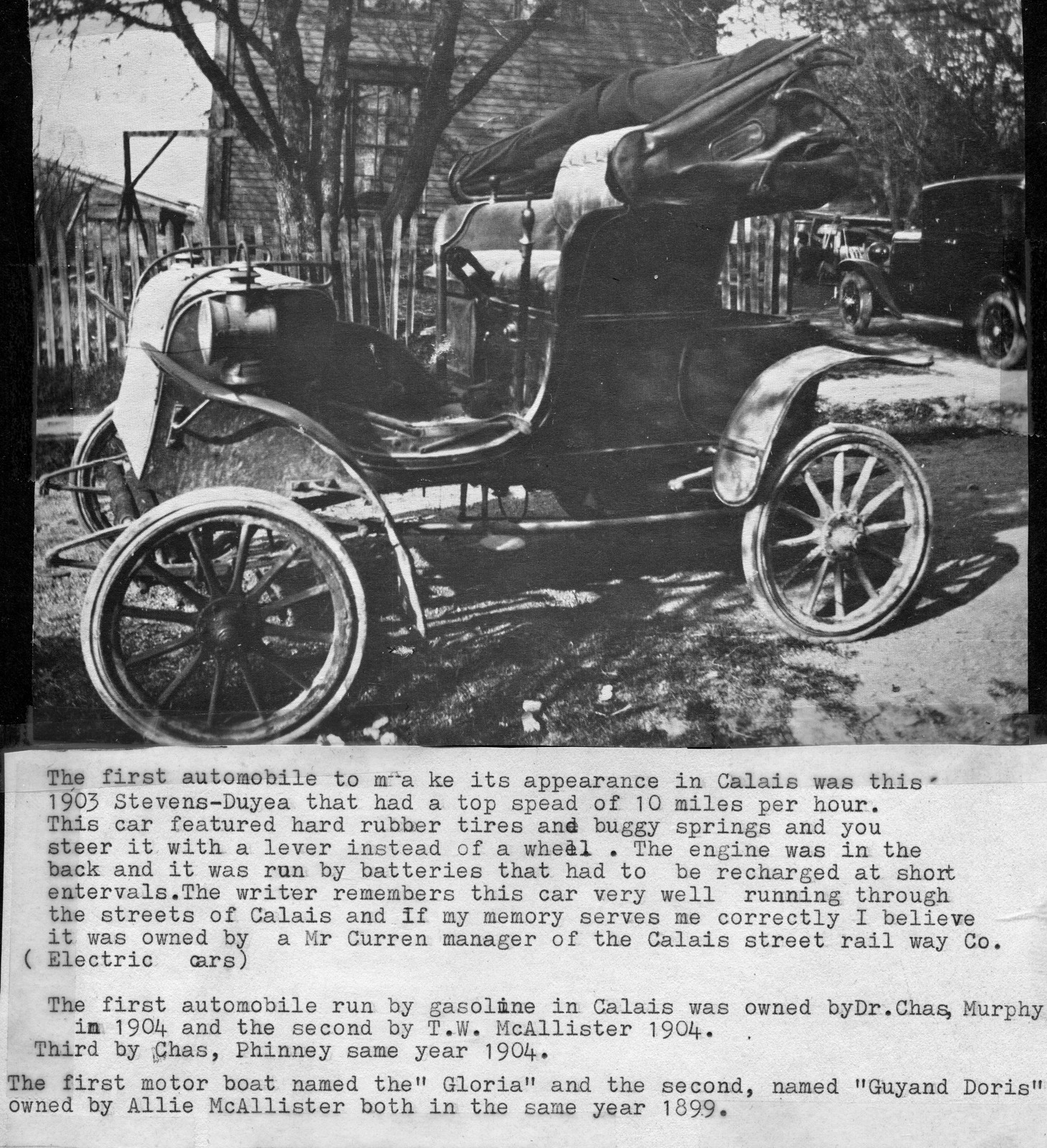
Salmon poaching aside, electricity has brought mostly positive changes. Nicola Tesla, a brilliant engineer and inventor, and Thomas Edison waged technological war over AC vs DC electrical current, a battle in which Edison was a rare loser and while Tesla did not build an electric car others did. At the beginning of the automotive age many assumed the electric car would become the standard. The first car in the St. Croix Valley was electric. Of course we know the internal combustion engine won that battle only to find itself backfooted a century later. The refrigerator put several local ice houses out of business and all manner of electric appliances have made life easier although we can argue whether some have made life better. Still, it would be an aggravation to repeatedly yank a cord to start our computers.