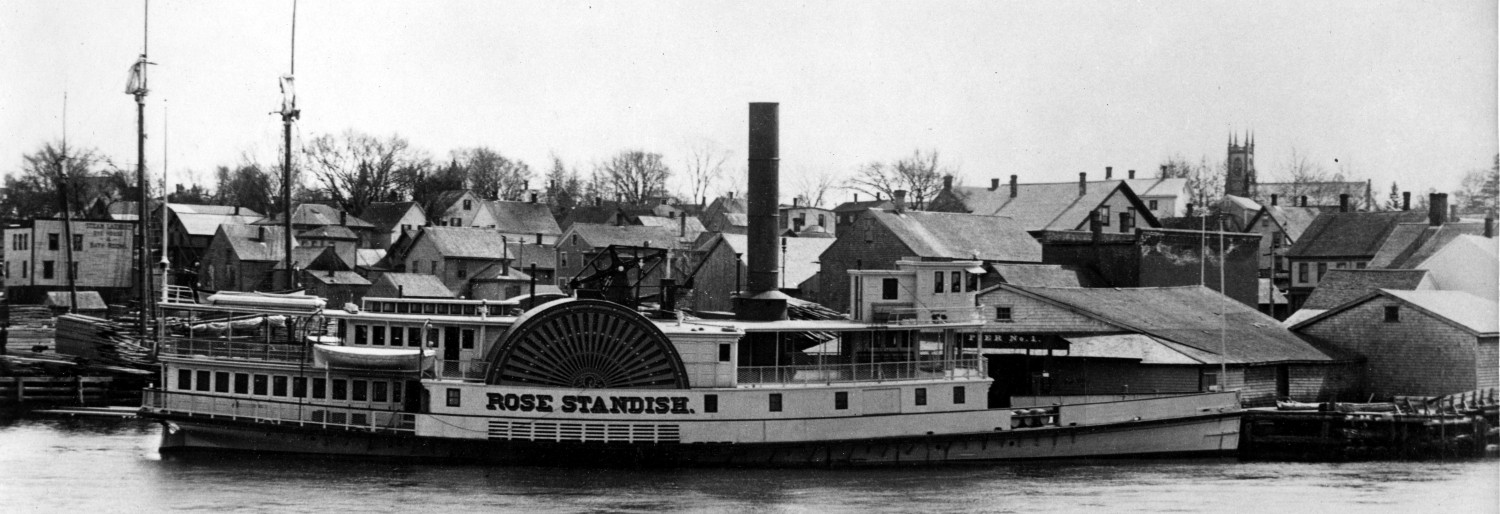
For those interested in history, new resources available online, especially old newspapers now accessible on Newspaper.Com, provide a wealth of information, odd stories and general news about life Downeast for over the last two hundred years. Some articles are amusing or quirky, others disturbing or sad such as the death of Eastport’s Ralph Ray, 7th U’S. Calvary of Eastport a year before the U.S. became involved in the Great War.
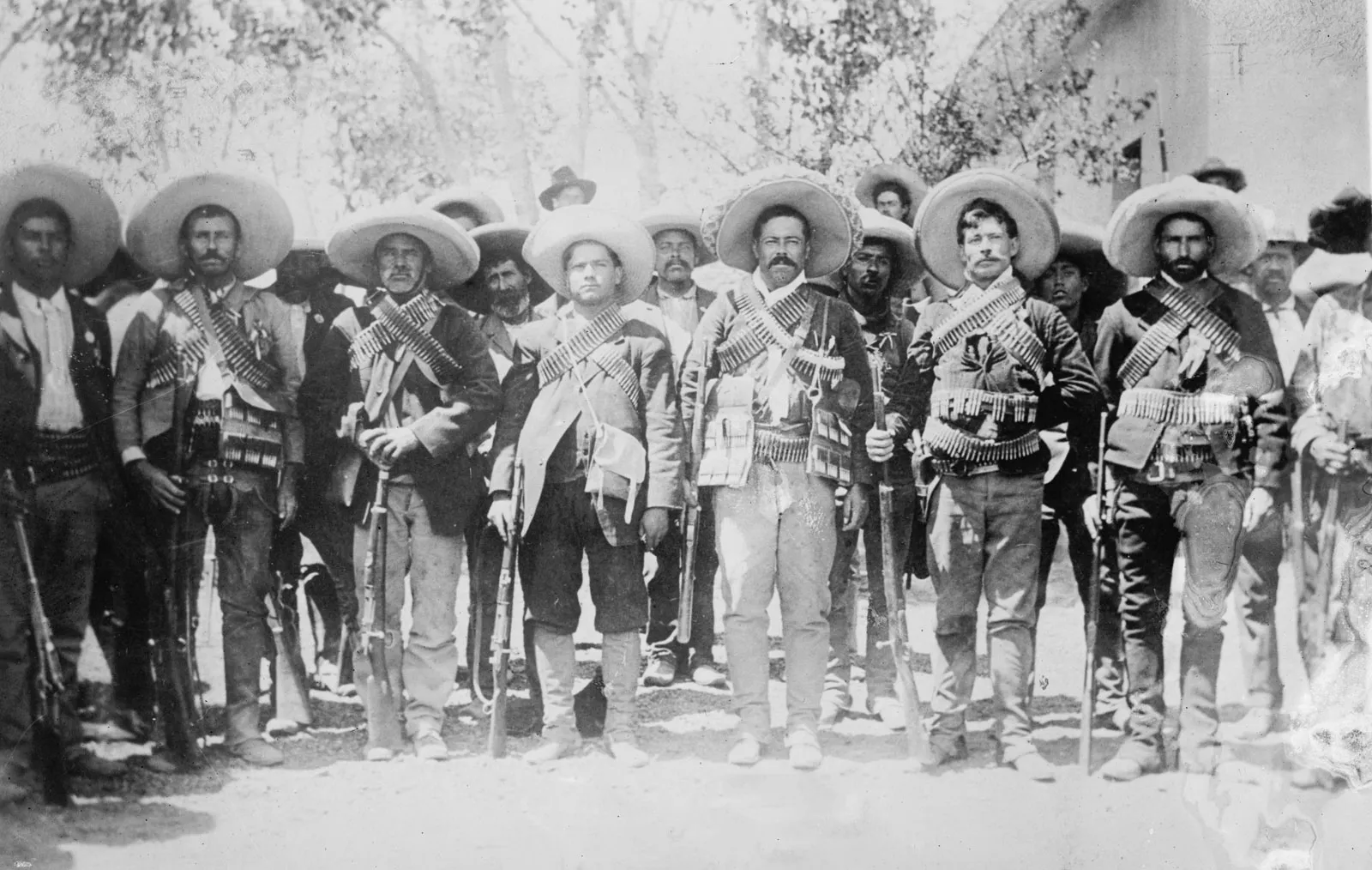
Pancho Villa center, black moustache
While the United States was officially neutral for nearly 3 years as the “Great War” raged in Europe we were at war along our southern border with Mexico. The notorious Mexican revolutionary Pancho Villa, shown above, was waging war against the United States along the disputed southern border and American troops were sent to capture or kill him. On April 22, 1916 U.S. troops clashed with Villa’s troops and one of the first U.S. casualties of that conflict was a young man from Eastport.
Commercial Bangor April 28, 1916:
EASTPORT BOY KILLED IN FIGHT WITH VILLASTAS
Ralph A. Ray, One of Two Members of Col. Dodd’s Troopers, to Lose Lives in Mexico.
Eastport, April 28.
One of the two of Col. Dodd’s troopers killed In the engagement with a band of Villa bandits April 22, was Saddler Ralph A. Ray, only son of George R. Ray of this city. Mr. Ray received a telegram Thursday night announcing the death of his son.
Press dispatches gave the name R. A. Ray.
Ray, who was a member of Troop L, was 22 years of age. When only 18 years of age he enlisted as a private in Co. I, second regiment, N. G. S. M. in Eastport, and was later promoted to sergeant, the youngest member to hold that office in the company. Always fond of athletics he took part in local basketball and baseball contests, was robust and healthy and his early training the militia fitted him for his later vocation. Three years ago he left for the west and soon enlisted in the cavalry and was later sent to the Philippines with the crack Seventh cavalry, in Troop L, and many interesting letters were received by his father in this city indicated that he saw considerable service and passed through numbers of thrilling experiences before his return to the United States. When trouble began with Mexico his troop was ordered to. the border and later sent into the interior.
Ray was one of many Downeasters to fight in this now forgotten conflict with Mexico- including three more men from Eastport- Clifford Mitchell, Peter Gilmore and A. Connelly. The country was naturally focused on the war in Europe so little recognition was given those who pursued Villa although we were not able to capture him. Villa’s luck ran out in 1923 when he was assassinated by political opponents in Mexico.

January 20, 1916
As noted above most Americans were concentrated on the war in Europe in 1916 and no community more so than the St. Croix Valley. Many friends and relatives from across the border were serving in the Canadian armed forces, casualties had been high and not a few locals from the U.S, side had violated the Neutrality laws by enlisting in the Canadian forces. “Neutrality” meant little Downeast but it was the law nationally and this led to some disagreeable situations when German POWs escaped from Canada’s largest POW camp in Amherst N.S.
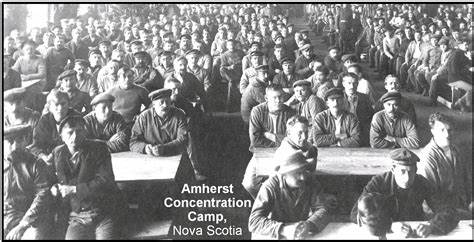
Amherst N.S. POW camp, the largest in Canada
The camp housed thousands of German soldiers captured in Europe and security, it seemed, was a bit lax. The Germans knew they had only to reach the Maine border, and they were free so many tried and a few succeeded.
CAPTURED AT CALAIS
Canada Will Institute Proceedings Seeking Their Return but It Is Believed U S Immigration Department Will First Pass upon Their Status
Calais Me January 19,1916
A situation of interest growing out of the war developed today when four men alleged to be German prisoners of war who had escaped from a detention camp at Amherst N.S. were captured on the American side of the border. They had crossed the ice on the St. Croix river two miles above this city from the New Brunswick shore. Three of the men had fled to Ayer Junction where they were about to board a west-bound train when United States Immigration Inspector H. O. Gillis arrested them. Another was caught here.
Canada Seeks Return
Agents of the Canadian government in this city said that formal proceedings would be started at once through the administration at Ottawa and the British ambassador at Washington seeking the return of the alleged fugitives to Canadian soil. The immigration department however it is understood will first pass upon the status of the men as applicants for admission to this country. A special board of Inquiry is expected to be ordered soon.
One German Admitted
In this connection local immigration officers today recalled that an escaped German prisoner of war arriving in Boston recently as a stowaway on a vessel after he had fled from French prison was admitted to the country upon fulfillment of the ordinary Immigration requirements. The men apprehended here gave their names as William Schroeder, Gustave Hartwig, George Kleinwort and Hans Neu. Dispatches from Amherst N. S. say that prisoners of those names were among the 13 who escaped from the detention camp there Monday night.
Seven of these prisoners were captured In New Brunswick today according to reports from the Dominion military authorities. Four were taken into custody at St Stephen N. B. removed by only a few miles from the American line— and three more at McAdam Junction also very close to the border. A 13th man William Wagner was said to be still at large. The escape from the camp at Amherst was effected by tunnelling for 150 feet under the walls to a point beyond the sentry line. It was said at the camp that the subway was a remarkable piece of engineering work involving much labor. Camp officials said that Hartwlg, one of the men under detention here was the leader of the fugitives and had previously escaped only to be re-captured at St John N. B. as he was about to ship on a schooner for the United States.
As painful as it was for U.S. authorities, all four Germans were allowed to remain in the United States and they could well have been repatriated to Germany to fight U.S. troops later in the war.
There is an interesting side note to this story. Leon Trotsky, the Russian revolutionary, was detained by the British during the war and interned at Amherst for a period of time. Trotsky was outraged especially as the Brits and the Russians were nominally Allies in the war against Germany. It is said that when he came to power in Russia with Lenin after the war his experience in Amherst convinced him the system of internment camps for political malcontents, later the Russian Gulag, wasn’t such a bad idea after all and Siberia was a perfect location for such camps.

Good fences make good neighbors The Berlin Wall
It is said “Good fences make good neighbors” although even if true I’m not sure anyone would want the neighbor who wrote this 1917 letter to the Boston Globe.
Boston Globe January 1917
What To Do When Neighbors Call
Calais, Me
If your neighbors call be natural; hear them and sympathize with them, but give them nothing to carry away. You can’t be too careful. Your popularity depends on that. Since you own your house your stay will be a long one and your peace of mind is dependent on your avoiding taking sides with any of them, no matter how you feel. Let them make the first advances. Sit back and size them up to yourself and if you find any worthy of your further interest return their advances and found a new friendship.
I have had a similar experience and have found but one I care to be intimate with, though I occasionally call on the others maybe three times a year. Keep conversation on generalities and, when you can, do a kindness and your place is established in the community. We own half an acre and are troubled as you are by the children. Unless a fence is a good one, it’s only an aggravation. And they ignore it. We plan to fence in In the Fall, as I have children to keep in as well as to keep the neighbors out, and a wholesale quotation on material is $60. That is for fancy Iron in front and one side, and hog wire the rest of the way three-foot wire. It includes a double drive gate and single walk gate and iron posts every eight feet.
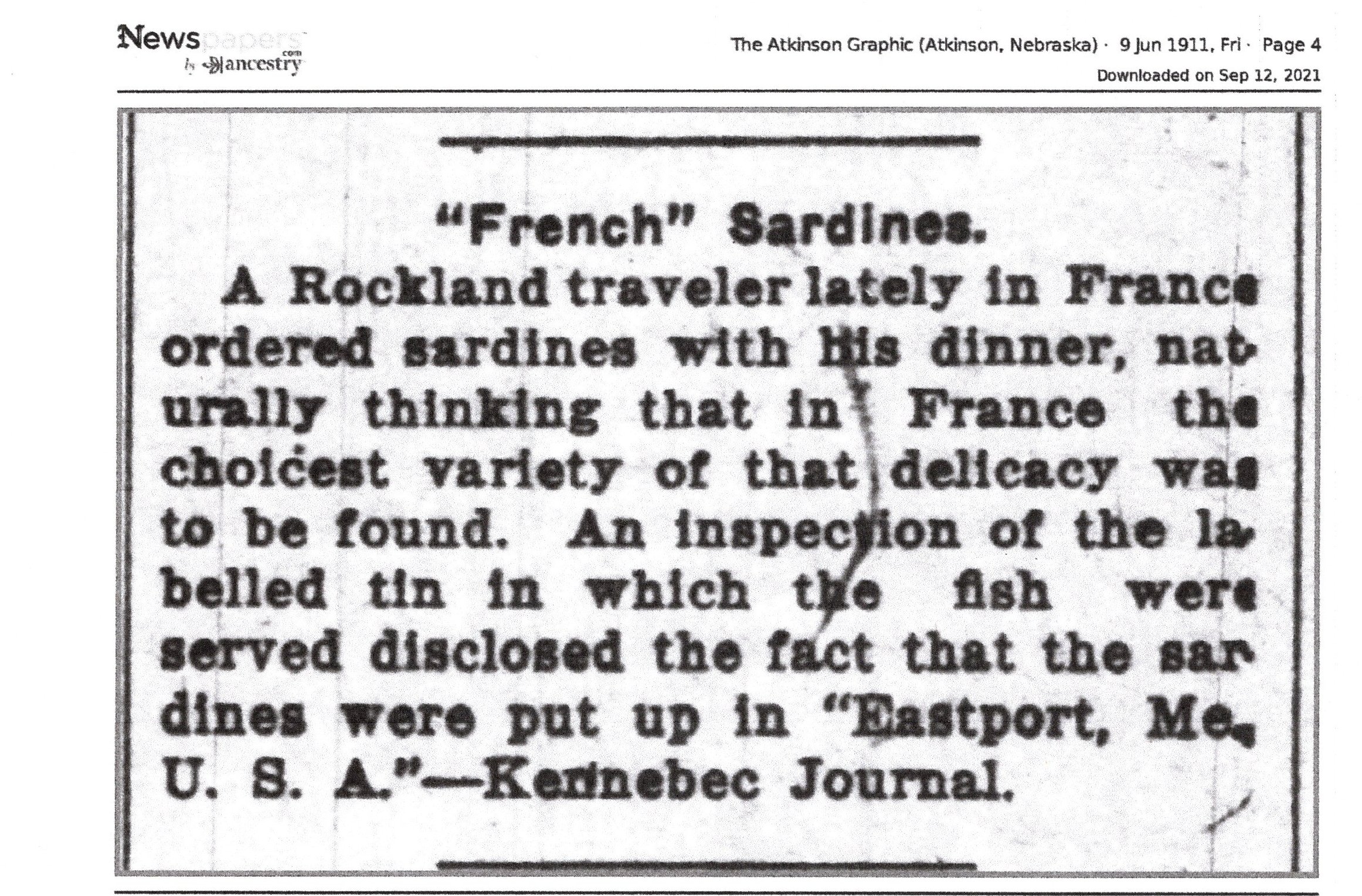
A word of advice-when visiting Paris don’t spend your French francs on such delicacies as French sardines.

The national papers loved articles about smuggling and the trials and travails of immigrants caught in the spider’s web of immigration law. A typical article from 1919 describes the arrest of 8 Chinese men caught on their way to Bangor after a boat smuggled them ashore in Eastport from St. John. The article only mentions in offhand fashion that 9 pounds of opium were also seized. The confiscation of pheasant feathers from Alice Osborne, a prominent Calais citizen, also made the national news although perhaps it was just a slow news day. The surreal complexities of immigration law left young Mary O’Neill without a country.
Fort Worth Texas Telegram January 30, 1909.
Immigration Officials of Two Nations Puzzling Over Case of Mary O’Neil, Whose Deportation Is Almost a Daily Occurrence
CALAIS. Maine,
Jan. 31. Mary O’Neill, otherwise known as “Mary Naples, the girl without a country,” is making no end of trouble for the immigration officers. If Mary is found in St. Stephen’s on the Canadian side of the line, she is chased across the bridge to Calais, in the United States, and if an American immigration officer gets sight of her he chases her back to Canada.
Mary’s case has been referred to Ottawa and to Washington, and high officials in the departments appear to be pondering over it. In the meanwhile, Mary is doing a shuttle act across the international bridge.
Mary O’Neill is a sprightly lass of about nineteen years, and says she was born in a shack near Moosehead Lake. Her parents were Italians, but it is claimed that her father was naturalized. Mary’s mother died, and her father married a St. Stephen’s girl and settled down in the Canadian town. Mary and her stepmother did not get on very well, and Mary was turned out to shift for herself. Then her troubles began.
Inspector W. Hawthorne, of the Canadian service, was called in by the St. Stephen’s town authorities, who believed that the girl might become a town charge. They claimed that she was American-born and belonged on the other side. Mary was escorted to the bridge and told to emigrate to America and stay there. She had been in Calais only a short time when the city officials called the attention of Inspector H. C. Gillis. of the United States Immigration Service, who, told Mary that she lived in St. Stephen’s and must go back home.
Mary does not seem to mind it, but rather enjoys the fun of dodging the immigration officers. It has been reported that the Canadian officers have positive orders “in her case to deport her on sight”, but Mary appears to have a strong liking for Canada. She has been known to get by the officers several times in disguise, and with her skirts tucked up under a long overcoat, a fur cap pulled down over her ears, with a cigarette at a Jaunty angle, has easily passed the sharp-eyed inspectors.

Chief Kerr and woman in front of the St. Croix Hotel
Bobby Kerr was one was a Calais original-its longest serving Chief of Police- a man who would pursue a shyster to Bangor to recover the $100 conned from a local man but kept all the bootleggers on the Union where he lived advised of the plans of the liquor law agents.
He apparently heated with wood.
Bangor Daily News April 26, 1933
CALAIS POLICE CHIEF HURLS CHALLLENGE AT BUCK-SAWING
(Special to Bangor Daily New) CALAIS–City Marshal Robert C Kerr has issued a challenge to any Police Chief in New England to meet him and demonstrate who is the better wood sawyer. Establishing what he terms is a record when he sawed four and a half cords of cordwood and threw it into the shed in one day he is anxious to meet in competition some strong arm of the law who thinks he can equal the record. He suggests that the contest take place before warm weather sets in and that United States Marshal Woodman act as judge.
He offers this as an added attraction at the State convention of Veterans of Foreign Wars that is to be held in Calais in June. His friends have already offered to subscribe liberally to back the genial marshal against any challenger and it is hoped that some chief who is familiar with a “buck- saw” will accept the challenge.
Some final Bits and Bytes from the papers:
The Freeport Journal of Freeport Illinois reported in August 1909 that it was custom in Calais Maine 70 years ago for a man hiring out to work not be compelled eat salmon more than twice a week.
The Waterville Sentinel reported in 1933 that a Calais man claims to have left an open bottle of beer next to an anthill and the next morning the bottle was full of dead ants and their hill depopulated. He was not sure whether they drank themselves to death or were just trampled in the grand rush for the drinks.
The Portland Express reported in 1925 that the Champion bike rider in Maine was a lady named Sadie Walsh from Pembroke who rode 500 miles in 59 hours- “The longest endurance run made by a woman, and which few men have equaled. She is known all over the State as a dashing and daring performer and gave exhibitions of her cycling in this and other states.” The article says she runs a little general store in Pembroke.
New England Telephone advised in a notice in the Calais Advertiser that the price of toll calls from Calais to Robbinston, Charlotte, Pembroke and Meddybemps would be 10 cents for every five minutes or fraction of a minute but “WE CANNOT UNDERTAKE TO HANDLE CALLS FOR A DESIGNATED PERSON” and “The caller will retain the receiver in his ear until an answer comes from the called station.

Calais men offended by bloomer wearing bikers
Finally, men in Calais won an important victory in the culture wars in 1895 when women abandoned an ill-advised campaign to wear bloomers when riding their bikes. Women had complained that wearing long skirts when riding was uncomfortable and dangerous but men claimed it wasn’t “ladylike”. The same objections compelled many women to ride horses side saddle.

Riding a bike was difficult when wearing a dress