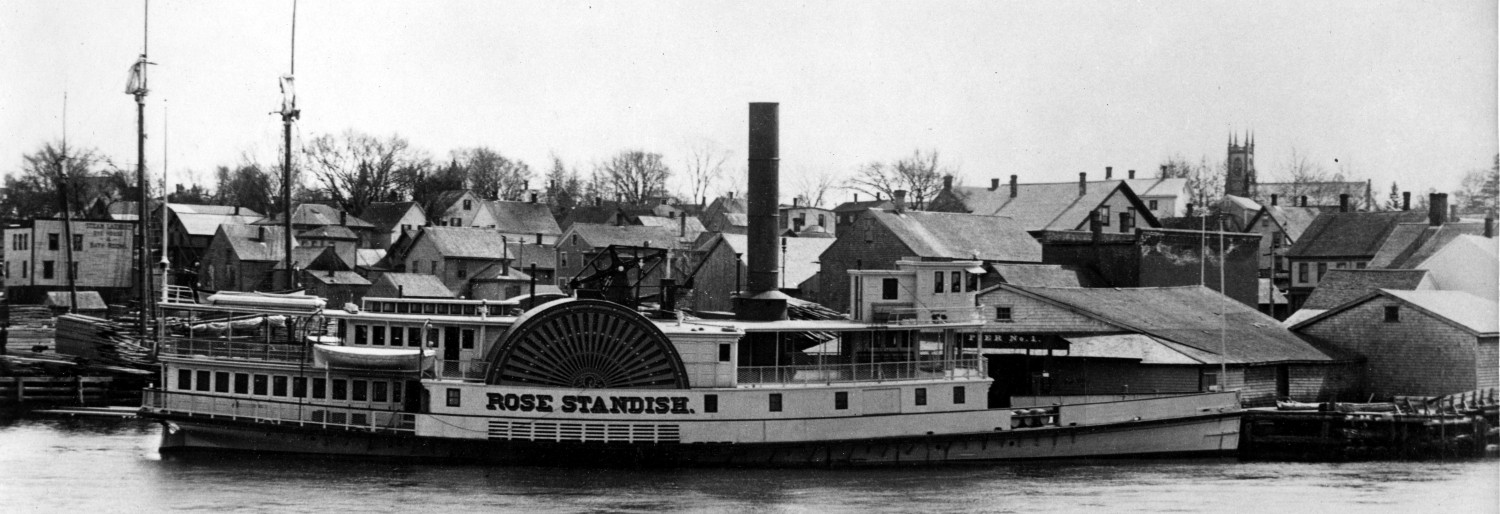
I recently wrote a short history of earthquakes Downeast and discovered only one such event of any importance-the 1904 earthquake with an epicenter in the Calais-Eastport area. It was the only significant earthquake in Maine history striking a populated area of the state. I thought it would be interesting to research the Downeast history of another type of natural disaster and the only one for which we have an official “season”- the hurricane.
According to the National Weather Service the hurricane season begins June 1st and ends November 30th. Predictions of the possible severity of the season are viewed with a great deal of interest in states bordering the Gulf of Mexico and along the southern Atlantic coast but are not much in the news Downeast. Even the most powerful storms have almost always expended their energy, wreaking havoc well south of Downeast Maine and even those with some fury left usually pass relatively harmlessly to our east.

Maine Hurricanes
Occasionally an hurricane follows a course which brings it over Downeast Maine- Bob in 1985, Edna in 1954 and Gerda in 1969. Gerda is the only “hurricane” to actually strike Maine and then with only a glancing blow. On September 10, 1969, Gerda made landfall near Eastport. Variously reported as category 2 or 3 storms, it is said to have been “the strongest tropical storm to make landfall in the Pine Tree State” with sustained winds of at least 75 MPH.

Gerda was hyped as a serious threat to Downeast Maine
Other reports claim the winds had reached 80 MPH when it made landfall near Eastport.

Gerda had boat owners in a panic
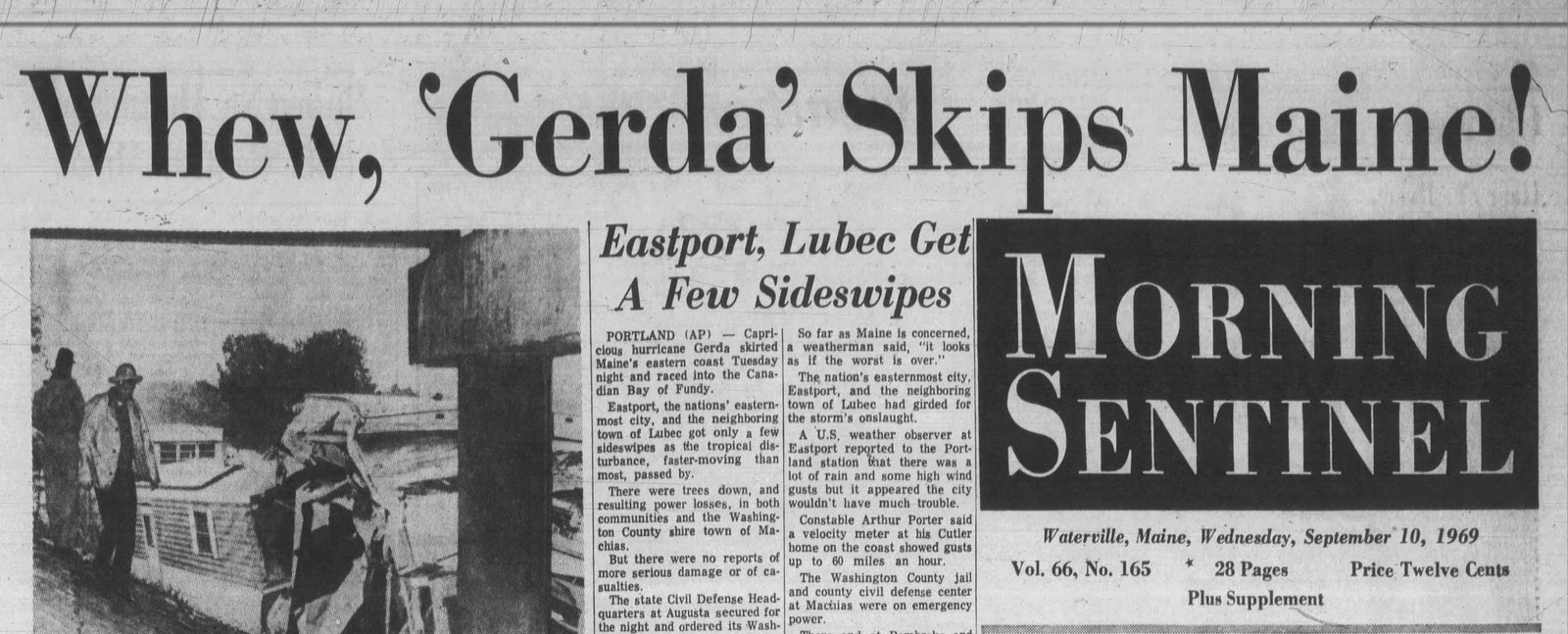
As almost always occurs the storm went “out to sea”
In the end Gerda veered to the east before fully impacting Eastport and Lubec, but the region had been on high alert. The day after the storm the Bangor Daily was somewhat critical of the Weather Service for causing such panic.
Hurricane Gerda stayed at sea, thankfully, but while she was rampaging off the New England coast Tuesday she was scaring the daylights out of everybody. Schools and places of business were hastily closed. Boats were hauled ashore. Windows were boarded. For several hours there was a period of near panic from Eastport to Cape Cod. The radio and TV stations didn’t help matters with their frequent alarms. But the real cause for the fright was to be found with the Weather Bureau. Gerda was moving swiftly along an erratic course and the bureau didn’t know just where it was at any given time. “The problem is that we don’t have any weather stations off the coast”, explained Chief Meteorologist Oscar Tannenbaum of the Boston Weather Bureau office, at the height of the excitement.

Robbinston Sardine plant blown into St. Croix River
In fact, Gerda had not caused nearly as much damage as the “Sardine Gale” known otherwise as the “Big Blow of 1951” which first demolished the sardine factory in Robbinston and then pushed the remains into the St. Croix. Other Downeast coastal areas were also hard hit by the “Sardine Gale” and over the years these sudden “Gales” have inflicted severe damage along the coast. None more so than the Saxby Gale of 1869 which from the damage inflicted Downeast must surely have had the sustained winds of a category 1 hurricane. It also provides a perspective on weather forecasting in the days before barometers, weather balloons, radar and satellites. Even more remarkable, the Saxby Gale was predicted by Lt. Stephen Saxby of London, England on Christmas Day 1868, nearly 9 months before it struck Downeast with such force that Downeasters were a very long time recovering from the blow.
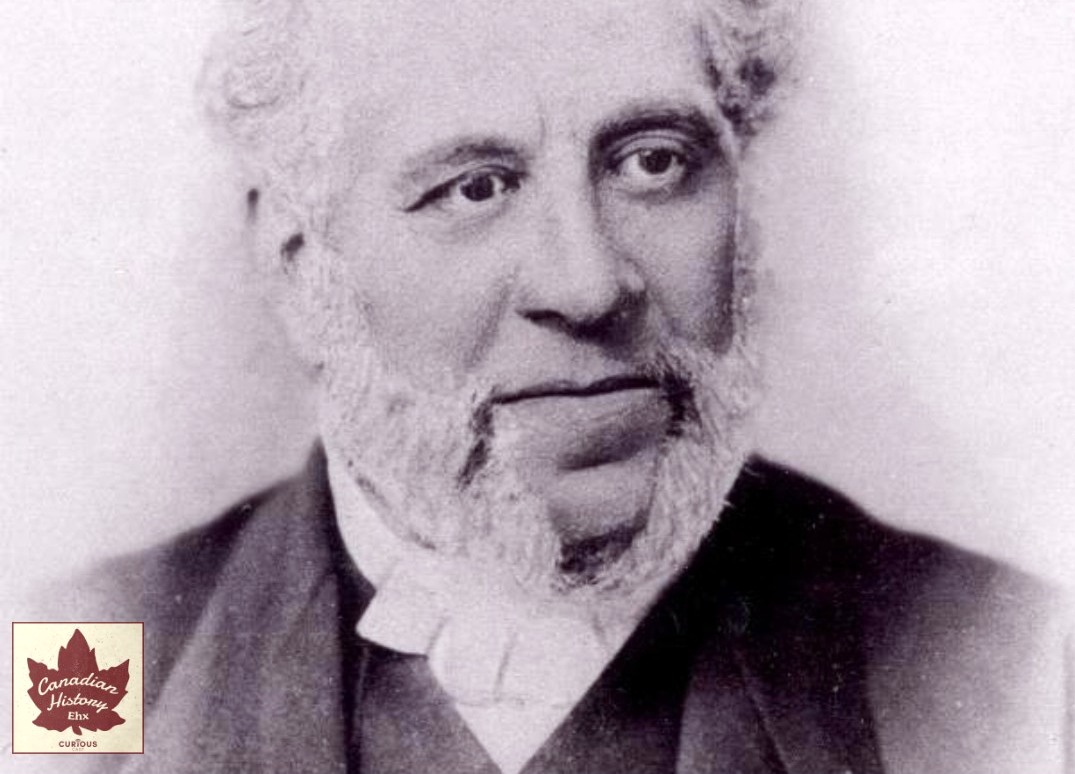
Lt. Saxby Royal Navy
In the 1860s, Lt. Stephen Saxby of the Royal Navy was a well-known weather forecaster before modern forecasting tools were available. In 1864 he published a book titled the “Saxby Weather System” which explained how he predicted when large storms would occur although the location of the predicted storms was less certain. On Christmas Day 1868 he wrote in a London newspaper:
London Standard December 25, 1868
I now beg leave to the state, with regard to 1869, that at seven a.m., on October 5, the moon will be at that part of her orbit which is nearest to the earth. Her attraction will, therefore, be at its maximum force. At noon of the same day the moon will be on the earth’s equator, a circumstance which never occurs without mark atmospheric disturbance, and at two p.m. of the same day lines drawn from the earth center would cut the sun and moon in the same arc of right ascension (the moon’s attraction and the sun’s attraction will therefore be acting in the same direction); in other words, the new moon will be on the earth’s equator when in perigee, and nothing more threatening can, I say, occur without miracle.
His warning was not forgotten. In early October 1869 Downeast newspapers repeated Saxby’s warning.
Halifax Evening Express, 30th September 1869
Gentlemen:
My attention has been drawn to a letter of Capt. Saxby, R.N., to the Standard of London in which a remarkable atmospheric disturbance is predicted for the coming 5th of October, as the result of the relative positions of the Earth, the Sun, and the Moon, on that day. It may be remembered that a similar prediction of weather likely to occur about the same period, based on similar reasoning, was given to the world some months ago, by an observer in one of the West Indian Islands. Other calculations from district sources point to like conclusions. I have been asked my opinion with regard to these forecasts; and would thus state it publicly, in the hope of doing some good.
I believe that a heavy gale will be encountered here on Tuesday next, the 5th Oct., beginning perhaps on Monday night, possibly deferred as late this Tuesday night; but between those two periods it seems inevitable. At its greatest force the direction of the wind should be South West; having commenced at or near South. Should Monday, the 4th, be a warm day for the season, an additional guarantee of the coming storm will be given. Roughly speaking, the warmer it may be on the 4th, the more violent will be the succeeding storm. Apart from the theory of the moon’s attraction, as applied to meteorology, – which is disbelieved by many – the experience of any careful observer teaches him to look for a storm at next new moon; and the state of the atmosphere, and consequent weather lately, appears to be leading directly not only to this blow next week, but to a succession of gales during next month. Telegrams from points to the South West of us might give notice of the approach of this storm, and I trust this warning will not be unheeded.[6]
— F. Allison, The Evening Express, Halifax, Nova Scotia. Friday, October 1, 1869.
Maine newspapers echoed the warning but even those who heeded the dire predictions could not have been prepared for the force of the storm which struck the Downeast on October 5th, 1869.
Landfall was first in Massachusetts but the storm quickly moved up the coast to Mt Desert Island where it was reported “the wind increased till it blew a perfect gale from 7:00 to 8:00 PM, cutting off chimneys blowing down barns, moving buildings from their foundations driving vessels on shore, there was never such a Gale hereabouts in this country since this country was settled the tide rose to unprecedented levels.”

1869 Debris in Eastport or perhaps Lubec Harbor, the Steamer New York was in danger of sinking
It then struck the Bay of Fundy in Eastport and surrounding towns. The Blairsville Pennsylvania Press reported:
Eastport October 6th via Bangor October 9th
Twenty-seven vessels are ashore at Romney’s Bay. The schooner Rio was lost in Saint Andrews Bay with all on board, 17 in number. Grand Manan Island was swept by waves, and all the wires and smokehouses are lost. The towns of Lubec, Pembroke and Perry lost heavily. Houses and barns were blown away. The tornado was worse for Eastport than the Great Fire. Revenue cutter Mosswood was disabled at the beginning of the storm and could render no assistance. All the smoke houses are down, an immense quantities of smoke herring and oil are lost. The loss cannot be less than $500,000. A large part of the town is a perfect wreck.
In St. Stephen, the St. Croix Courier reported:
Storm of the Century
TERRIFIC GALE!
Immense Loss of Property
A storm, more terrific in its character or more disastrous in its consequences than that which occurred on Monday evening, between the hours of 6 and 10 o’clock, have never been known in this locality. The tide rose to a great height, and when the storm was at its highest the fury of the wind was terrible. We have heard of many persons who left their houses fearing that the buildings would fall and bury them in the ruins. In the country districts, indeed, several houses were blown down, as will be seen by the reports we furnish below; and the amount of property destroyed is almost incalculable. In many cases the parties could ill afford to bear the loss, and in all cases it comes heavily enough. It has been estimated that five hundred thousand dollars would not make good the injury in this County alone.
About eight o’clock our streets presented an appearance which baffles description. Brick bats from adjacent chimneys were flying before the wind, signboards were dashing promiscuously around, planting themselves in places they were never designed by their possessors to occupy, and pedestrians were almost lifted from their feet and carried away by the force of the wind.
We have made every exertion to obtain a full and accurate report of the amount of damage done in this section, and we print below a statement of the facts as we have been able to gather them. We may say, however, that it is necessarily incomplete. For, although our Reporters have been diligent and untiring in their efforts to obtain full particulars, yet from the extent of country to traverse, it would require weeks of labor to prepare a full statement of all the injury that has been wrought by an event so unusual in this climate.
The final tally of damage in St. Stephen and adjoining areas eventually ran to several pages and included most church steeples, dozens of barns with concurrent loss of cattle, too many private homes to list and nearly all the telegraph wires. “Fine apples trees which had stood the blast of nearly half a century were torn from the earth and destroyed” while perhaps the most significant loss was in the forests where valuable timber was destroyed to such an extent that “there were hundreds of acres so demolished that not one tree in ten stands, and still other hundreds of the best pine timber in the country, if not in the state, which retains not one in a hundred standing.” One lumber baron sent teams into the woods to assess the damage. They reported they “could walk ten miles at a time on the trees down without stepping on the ground. In some places for half a mile every treee was down.” All four bridges the Calais, St. Stephen and the Milltowns were severely damaged or destroyed. The railroad bridge at Salmon Falls “was destroyed and now lies in the stream a hopeless pile of ruins. Its loss will be seriously felt by the lumber merchants.”
In St. Andrews the recently built barque GENII was driven ashore and the entire crew of 13 lost. The Urbana Ohio Gazette reported that of 108 vessels on the coast between Campobello and Calais only 18 were undamaged.
In Calais, like St. Stephen, most church steeples were lost, and dozens of houses and barns were damaged. A man who went outside during the gale was lifted by the wind and transported across Main Street, but he survived without any serious injuries.
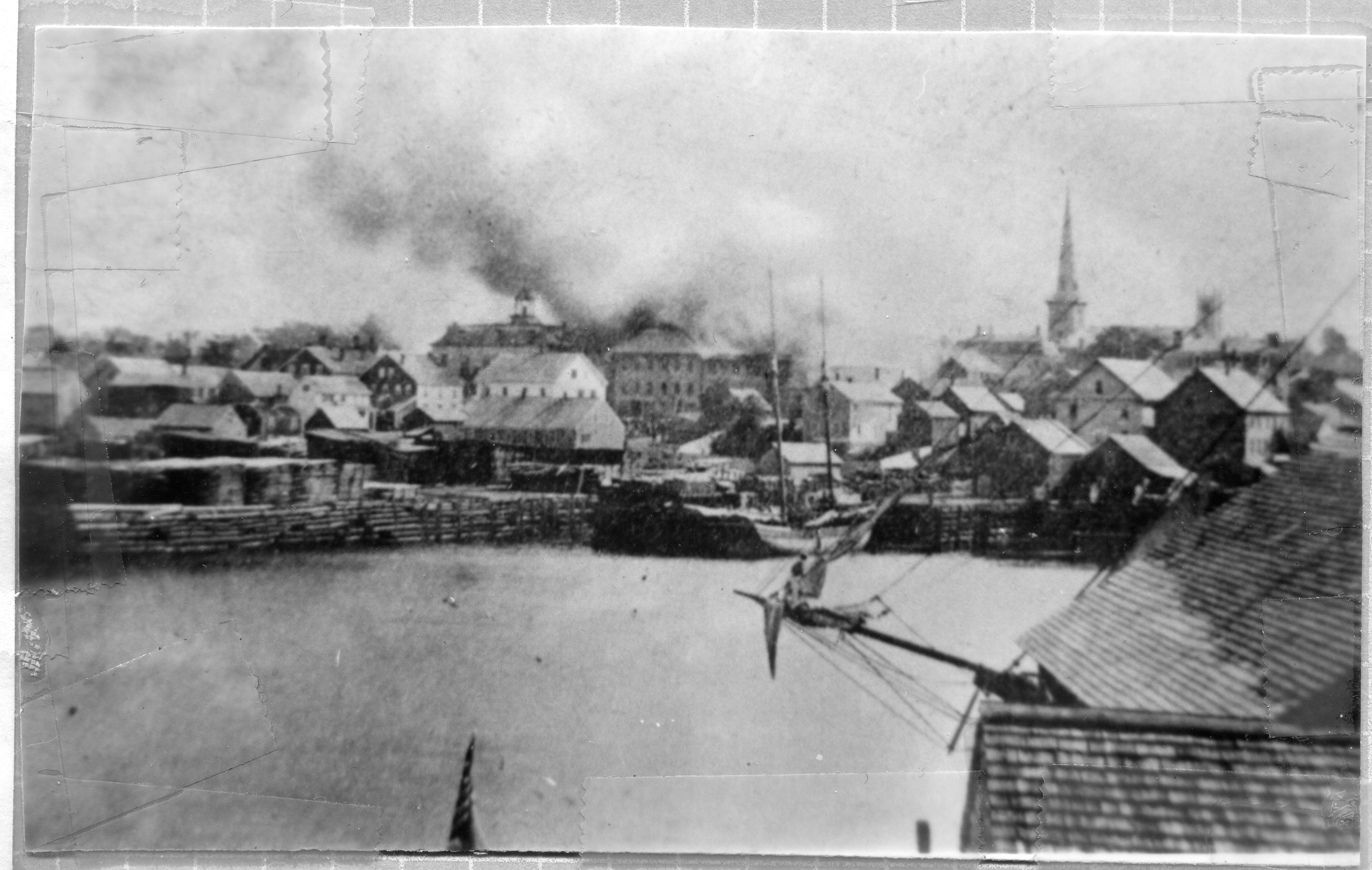
Great Fire of 1870 begins in back of what is now Karen’s Restaurant Calais
It took years to repair the damage from the Saxby Gale. Calais was still in the process of doing so when the Great Fire of 1870 destroyed much of Calais business district and waterfront. The photo above was taken from St. Stephen. The fire has just begun in the photo above. Most of the buildings to the left of the smoke would be consumed by the fire.
Without question the Saxby Gale of 1869 was a storm of Category 1 hurricane dimensions. Nothing before or since has come close to equaling the destructive power of the Saxby Gale. In the century and a half since the Saxby Gale, Downeast hasn’t experienced an earthquake worthy of the name in its history.

For those adventurous types who would like some excitement in their lives one could relocate to the “Great Ring of Fire” in the Pacific where in any given month one can experience an earthquake, volcanic eruption or a typhoon all followed of course by massive flooding and/or a tidal wave not to mention brutal heat and humidity. In truth we Downeasters are pretty lucky climate wise.
A word on Lieutenant Saxby of the British Royal Navy. He was according to Wikipedia “a British practitioner of a form of meteorological astrology or Pseudo Meteorology in the Victorian Era.” In other words, a quack. Many claim Saxby’s prediction of the Saxby Gale was pure luck and it is fair to say Saxby’s prediction was not specific to Downeast Maine or even the Atlantic Coast of the United States. It was more a prediction that general weather conditions worldwide could result in such aberrations as the Saxby Gale. In fact, he predicted enormous tides on London’s Thames and other English rivers and bays the same day and thousands flocked to their shores only to be disappointed. Newspapers reported “many people were terrified by these predictions, but Mr. Saxby’s reputation was the only thing really injured”. On June 24th, 1876, he made similar predictions of a violent gale on the Thames which the London Gazette reported as “only a brisk breeze which made the leaves flutter freely and sent occasional drifts of dust along streets and roads that had not been visited by watercarts”.
In 1870 he warned of such massive tides that Singapore spent a fortune “to protect the city from the anticipated floods” only to have tides not as high as usual and 1870 “Lieutenant Saxby got into the bad books of the inhabitants of Peru” when he predicted bads storms at the same time a Professor Falk predicted an earthquake for the area.
“No less than 60,000 of the people of Lima and Callao left their homes, carrying with them whatever of their possessions were portable, and remained camp out for a week in tents and sheds, where they caught agues and fevers. What they lost by a week’s suspension of business, by the removal of their goods, and by robberies- for the thieves did not give way to the general panic- is estimated at nearly $1,000,000. Enraged by this, the luckless Peruvians gave vent to their anger by burning Professor Falb and Lieutenant Saxby in effigy and were according to the last account still heaping maledictions upon the prophets.
Stephen Martin Saxby died in 1883.