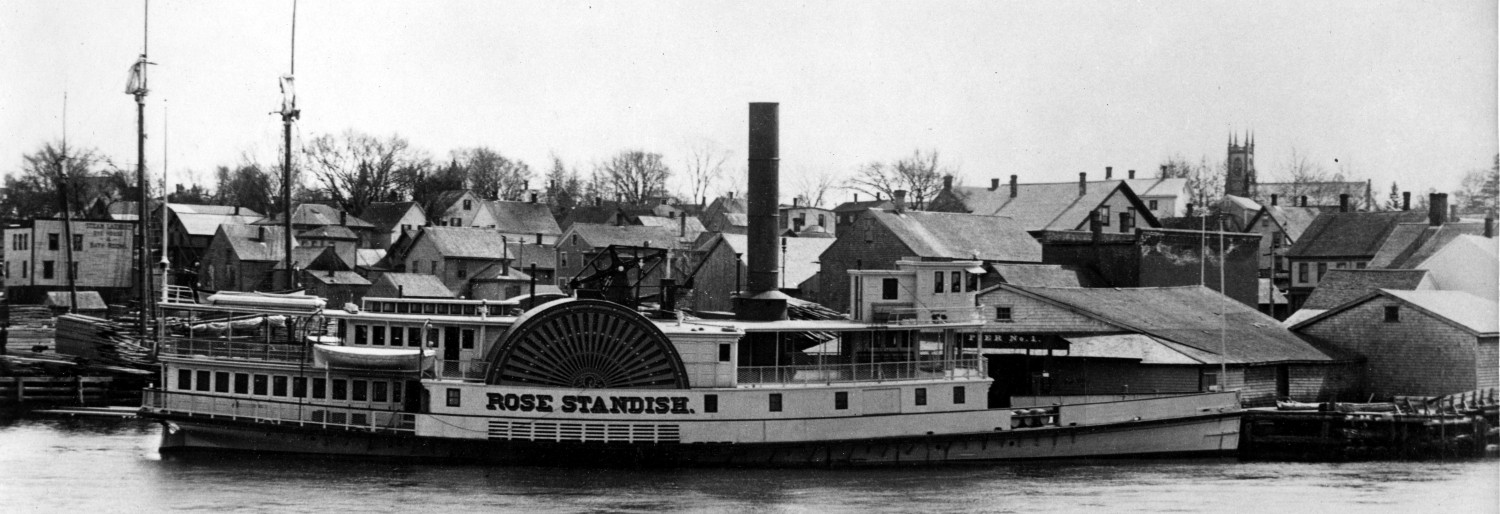

Sam McKnight, far right
Sam McKnight, far right, was a true Milltowner. Born in 1872 he lived in Milltown nearly his entire life, a long life of 97 years during which he and his wife Mary had several children and at his death 13 grandchildren and 30 great grandchildren. Like many in Milltown he loved the outdoors and spent much of his leisure time fishing at his cottage on Big Lake.
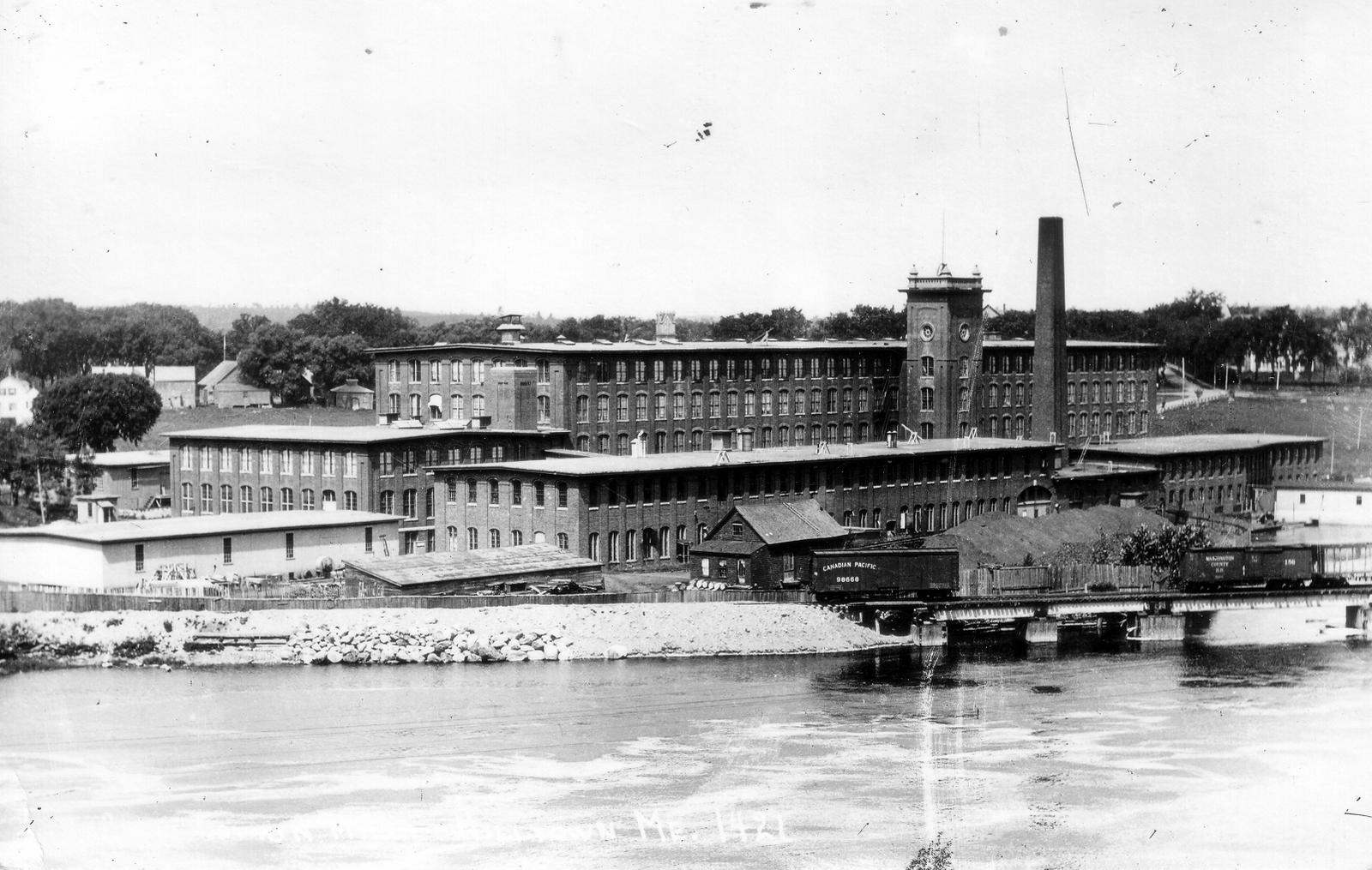
Cotton Mill, Milltown N.B.
Also, like many in Milltown he went to work young, thirteen in Sam’s case and at 18 he got a job across the river at the Cotton Mill in Milltown New Brunswick, a job he held for 56 years before retiring in 1933 as an overseer at the mill. He then took up carpentry and at the age of 90 was still shingling roofs for his neighbors and friends.
Sam was active in local politics and one of the leading citizens of Milltown, but he was not the sort of fellow to make the news. I find only one story in the newspapers which mentions Sam and that involved a tragic accident in 1934 when a fishing companion drowned.
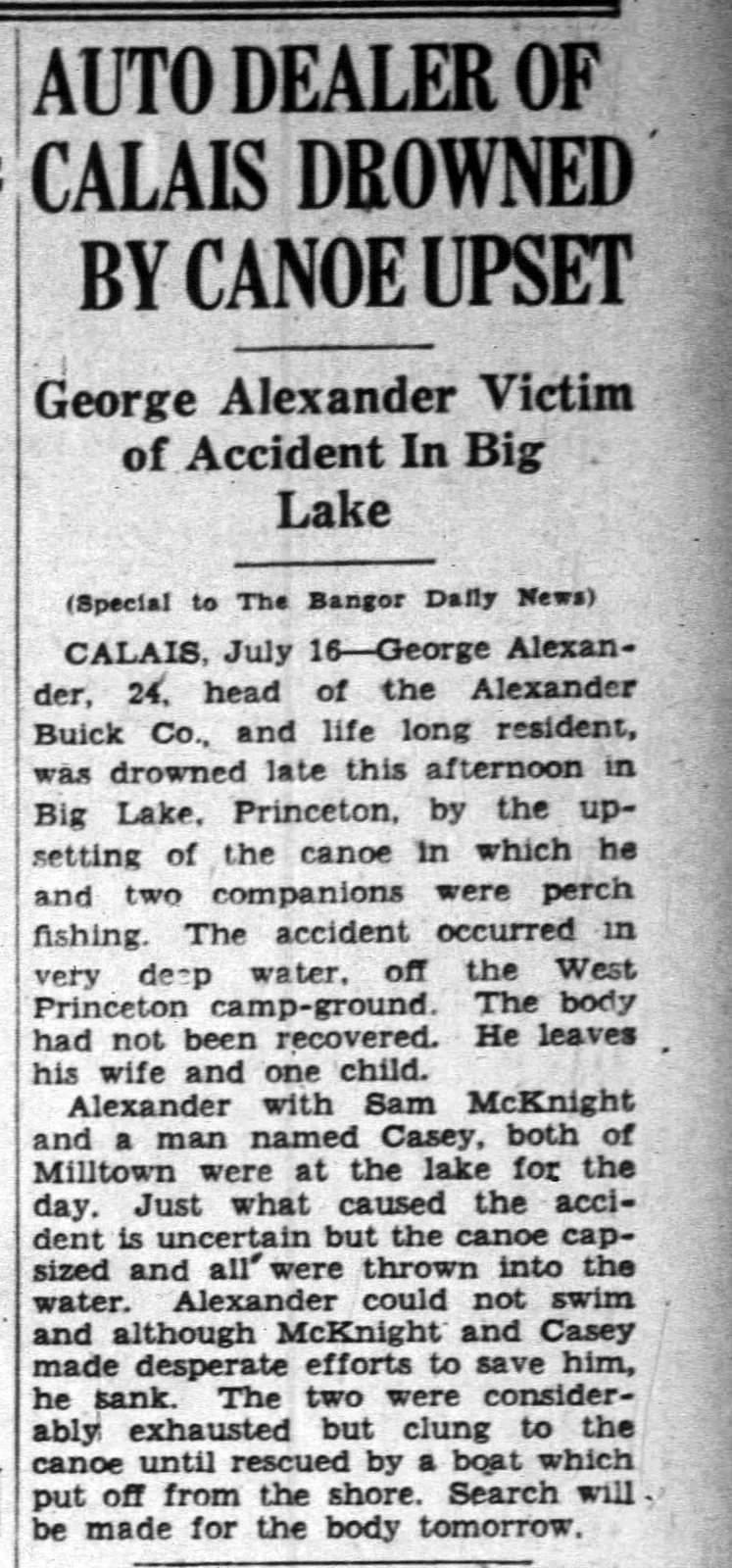
Founder of Alexander Buick garage drowns Big Lake
Still, it is said we are all entitled to 15 minutes of fame and Sam had only to be patient until 1955 for his time to come. One pay day in 1910 Sam went to pick up his pay envelope at the Cotton Mill and the envelope was nowhere to be found. It had simply disappeared. The envelope had either been lost or stolen, perhaps there was an oversight in the payroll office, but Sam went a week without pay, not an insignificant matter in those days. Only 45 years later did Sam find out what had happened to the pay envelope.

In 1955 the above article was published in hundreds of newspapers throughout the country. It was the sort of quirky, amusing story that once on the newswire found its way into the national newspapers. I don’t suspect Sam took his newfound and very fleeting fame too seriously. He didn’t seem like that sort of fellow, but he probably again spent some time pondering who the culprit might have been.
Of course, Sam was the luckier of the two. He had soon recovered from the loss of the week’s pay, but the thief’s conscience had, it seems, bothered him for 45 years. It was a terrible price to pay for the few dollars in Sam’s pay envelope. To his credit $50 was nearly 5 times what Sam would have earned that week in 1910. Wages for cotton mill workers in 1910 were about 20 cents an hour.